Backup power for your home
Four ways to keep the furnace, fridge and sump pump running through an outage, and which of them need an electrician.
Four ways to keep the power on
Start with what must run: usually the furnace blower, the fridge and freezer, the sump pump, a well pump if you have one, and a few lights and chargers. Add up their running watts from the nameplates with our load worksheet, then choose one of four set-ups.
Battery power station
Runs phones, lights, the router and a fridge for a while. Battery units make no carbon monoxide and can be used indoors (Government of Canada).
Portable generator and cords
Runs the fridge, freezer and a sump pump through heavy-duty outdoor cords. It runs outdoors only, at least 6 m (20 ft) from the house (Health Canada).
Generator with a transfer switch or interlock
Runs the circuits you choose on the panel, including the furnace. A licensed electrician fits it, and most places need a permit or a notice to your utility.
Standby generator
Runs the whole house and starts on its own, on natural gas or propane. It needs an installer and a licensed electrician.
Safety: Never plug a generator into a wall outlet: power flows back into the lines and can kill line workers. A generator connects to the house wiring only through an approved transfer switch fitted by a qualified electrician (Government of Canada). Run fuel generators outdoors only and fit CO alarms near bedrooms.
What helps
Our pick for each of the four set-ups.
Power stations
EcoFlow DELTA 3 Plus Portable Power Station
1 kWh LFP, under-10 ms UPS, expandable, fast charging
$719–$799at EcoFlow US · prices may have changedPrice checked . Product prices and availability are accurate as of the date/time indicated and are subject to change. Any price and availability information displayed on EcoFlow US at the time of purchase will apply to the purchase of this product.Check price at EcoFlow US (opens in a new tab)
Portable generators
Generac GP8000E Portable Generator with COsense
8,000 W with COsense, L14-30R and a CSA version for Canada
Transfer switches
Generac Whole House 200A Utility / 30A Generator Manual Transfer Switch
Whole-panel manual switch with built-in L14-30 inlet
Standby generators
Generac 22kW Air-Cooled Home Standby Generator
22 kW on propane, US and Canada certified, cellular monitoring
Find an electrician who connects backup power
Pick the job, then your city.
We don’t store what you type.
Guides
Best-of
The best generators for a power outage in Canada
Five portable generators with CO shut-off for winter outages, ranked for Canadian homes: size, safe hookup, fuel and the Canadian mark.
Buying guide
What size generator do I need? A load worksheet
A fill-in load worksheet for sizing a generator from your own nameplates: running vs starting watts, 240 V, furnaces, and portable vs standby vs battery.
Comparison
Interlock vs transfer switch: which generator hookup is right?
Two safe ways to connect a portable generator to your panel, which one fits your house, and the rules by province and state.
Comparison
Portable power station vs generator for a power outage
Silent and indoor-safe, or energy for days: how a 1 kWh power station and a 4,500 W dual fuel inverter compare through a real outage.
Questions about backup power
Can a power station run my whole house?
Not a 1 kWh model. It runs a few chosen appliances for hours. Larger battery systems can back up part of a panel, but they are then a permanent installation, with a transfer switch fitted by a licensed electrician. Our power station vs generator guide compares them.
Can I install a transfer switch or interlock myself?
No. Both mean working inside the panel or at the service entrance, where parts stay live with the main breaker off, so hire a licensed electrician. In most places a permit or a notice to your utility comes first; see rules by province and state.
Is a 22 kW standby generator too big?
For essentials alone, it can be. Ask the installer for a written load calculation, and check how much fuel the bigger unit burns at full load. Our sizing guide shows how to add up what must run.
Do I need a permit to wire in a generator?
Usually. A generator wired into your home needs an approved transfer switch, fitted under a permit, so it can’t feed power back into the lines (BC Hydro). Plan it before you buy; your electrician files it.
What kinds of transfer equipment are there?
The common ones are a manual or automatic transfer switch (certified to CSA C22.2 No. 178.1 or UL 1008), an interlock kit from the panel’s own maker, and a double-throw safety switch (CSA C22.2 No. 4 or UL 98). Automatic switches go with standby generators; manual switches and interlocks suit portables.
Is an interlock kit as safe as a transfer switch?
Both stop backfeeding when they are certified and fitted properly; an interlock should be the panel maker’s own accessory for your panel. Our interlock vs transfer switch guide covers cost and which circuits each can run.
Comes with
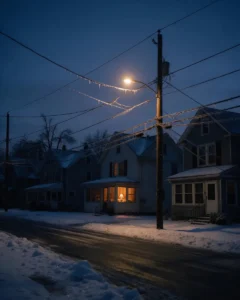
Power outages
Keeping the furnace, fridge and sump pump running when the grid goes down, and connecting backup power safely.

Ice storms
Freezing rain, ice on lines, roofs and trees, and the long outages that follow.
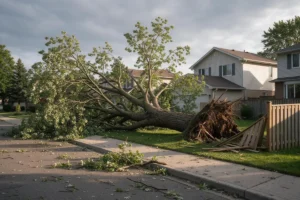
Wind and storms
Surge protection, backup power and help with fallen trees after high wind.
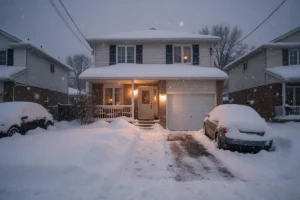
Snowstorms
Clearing heavy snow from the drive and the roof, and stopping ice dams.