Ice storms
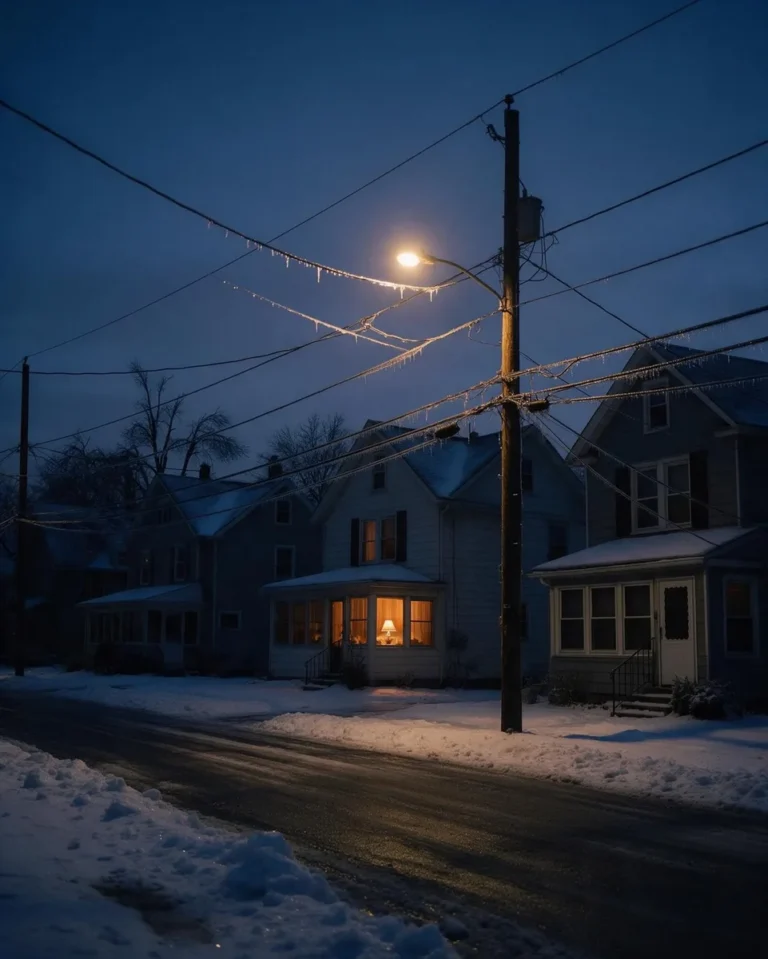
Freezing rain, ice on lines, roofs and trees, and the long outages that follow.
What an ice storm leads to
Ice building up on lines and trees falling across them are among the main causes of winter outages, so most of getting ready is about getting through without power.
Backup power for your home
Four ways to keep the furnace, fridge and sump pump running through an outage, and which of them need an electrician.
Frozen pipes
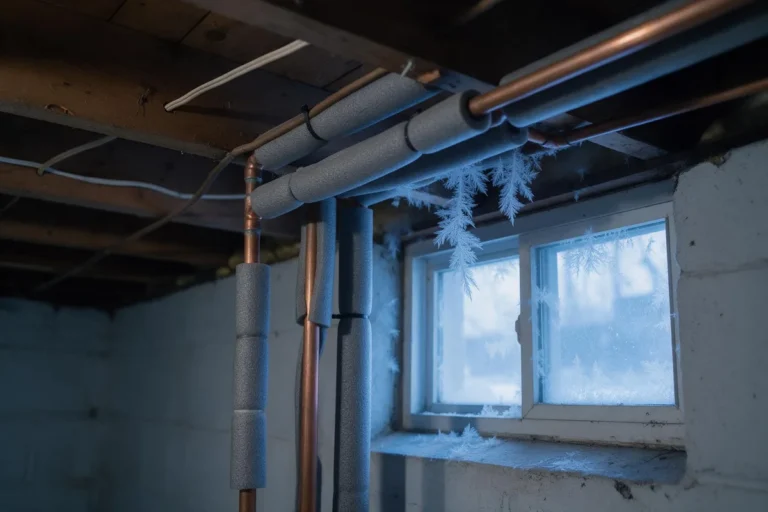
Keeping water pipes above freezing in a cold snap or an outage, and what to do when one freezes.
Ice dams
Why ice builds up at the eaves, how to stop it forming, and who clears it when it does.
Storm and tree damage
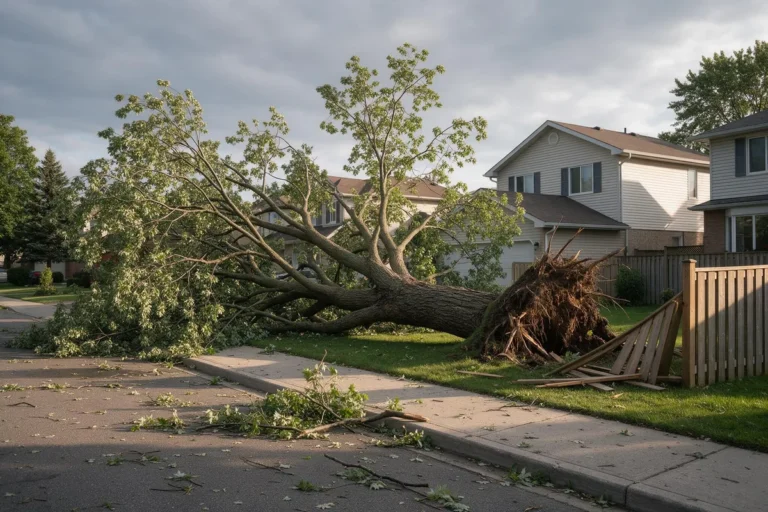
Fallen trees, downed lines and storm repairs: what to leave alone, and who to call first.
Emergency kit
What to have ready so your household can look after itself for at least 72 hours without power or tap water.
The ice storm checklist
Plan to look after your household on your own for at least 72 hours (Get Prepared). The steps follow Canada’s Get Prepared pages, Health Canada and the US Consumer Product Safety Commission, in the order you will need them.
1 Before the freezing rain
- Get the alerts. In Canada, install the WeatherCAN app: freezing rain, freezing drizzle and flash freezes come as colour-coded ice alerts. Your utility’s outage map shows whether your address is affected. In the US, NOAA Weather Radio broadcasts National Weather Service warnings around the clock (weather.gov/nwr).
- Agree the household plan: who checks on older relatives and neighbours, where you would go if the house gets too cold, and what happens with medicine that needs a fridge. Talk to your doctor ahead of time about any medical device that needs power.
- Stock the kit for at least three days: the emergency kit page lists what goes in it. For an ice storm add fridge and freezer thermometers, warm layers, salt and a shovel.
- Charge everything: phones and power banks to 100%. Keep the car’s tank at least half full or the EV charged, since gas stations and chargers can lose power too.
- Test the CO and smoke alarms. Health Canada says to have at least one CO alarm with battery backup if you have any fuel-burning appliance; in Canada, buy one with a Canadian certification mark (CSA 6.19 is the CO alarm standard).
- Check pipe heat cables, unplugged, for cracked or charred insulation and bare wire, and plug them into a grounded, GFCI-protected outlet (CPSC). They need power, so they won’t help during the outage itself.
- Clean the chimney if you have a wood-burning fireplace, and have fuel-burning appliances serviced each year.
- Decide on backup power now, not during the storm: backup power for your home compares the set-ups and who fits each. Protect electronics with a surge-protecting power bar, or ask an electrician about a whole-home surge protector.
2 The first hours without power
- Check whether it is just you. Look at your breaker panel, with dry hands and not standing on a damp floor. If the neighbours are dark too, report the outage to your utility.
- Unplug tools, appliances and electronics, and turn the thermostat down, to avoid damage from a surge when power returns. Leave one light switched on inside and one outside, so you know when it is back.
- Keep the fridge and freezer closed. Health Canada says an unopened fridge keeps food cold for about 4 hours, a full freezer about 48 hours and a half-full one about 24.
- Save your phone: switch on power saving, keep calls short, and stay off the roads, where traffic lights may be out and ice is on everything.
- Stay warm safely. A natural gas fireplace can provide warmth until the power is back, but a gas stove must not be used to heat the house (Get Prepared). Kerosene, propane and oil heaters and lamps never go in enclosed spaces unless they are made for indoor use, Health Canada says. Snow and ice can block appliance vents: check the outside vents for the furnace, dryer, fireplace and stove during and after the storm.
- Run water through the cold. The federal winter-storm page advises a trickle of water to stop pipes freezing; frozen pipes covers what to do if the house gets cold.
- Run backup power by the clock: a battery power station for the overnight loads (a CPAP, the modem, a lamp), a generator in daylight for the fridge, the freezer and the sump pump. A CO shutoff on a generator does not replace the alarm inside.
Generators: outdoors only, at least 6 m (20 ft) from any home or building (Health Canada; CPSC says 20 ft), exhaust pointed away, never under an awning or carport. Turn it off and let it cool before refuelling, and plug appliances straight into it with properly rated outdoor cords.
3 Hours 24 to 72
- Check the fridge and freezer thermometers rather than opening the doors to look. Don’t put frozen food outside, even in winter: Health Canada warns that animals can get at it and the sun can thaw it on a very cold day. If the outage will be long, ask friends or family who have power to store your food.
- Listen to local authorities about tap water if your area’s water service is affected.
- Check on older neighbours and anyone with a medical need.
- If the house becomes too cold to stay in, go. Get Prepared says to be ready to evacuate when cold makes a home unsafe. Take your kit, listen to your municipality for warming centres, and if there is time, switch off the main breaker before you leave.
- Leave downed lines and fallen trees to others: storm and tree damage says what to stay clear of and who to call.
4 When the power comes back
- Give the grid a moment. Turn the heating thermostats up first, then plug in the fridge and freezer, and wait 10 to 15 minutes before reconnecting everything else (Get Prepared).
- Make sure the water heater is full before its power comes back on, if you drained the plumbing.
- Check the pipes. Water expands as it freezes and can split a pipe, and leaks can hide behind walls. Once thawed, look for water damage and watch those areas for mould.
- Sort the food. Food that still has ice crystals or feels fridge-cold can be refrozen, and a digital food thermometer tells you when cooked food has reached a safe temperature (Health Canada).
- Restock the kit: recharge lanterns, radio and power banks, rotate stored fuel, and replace alarm batteries you used.
- Neighbours back on and you’re not? After a long outage, utilities may bring addresses back gradually, so check your breakers, then the utility’s map. If you think the electricity service caused damage, ask your utility how to claim.
Guides
Questions about ice storms
How long will food stay safe in the fridge and freezer?
Health Canada says about 4 hours in an unopened fridge, about 48 hours in a full freezer and about 24 in a half-full one. Food with ice crystals, or that still feels fridge-cold, can be refrozen.
How do Canadians get weather and emergency alerts now?
Alert Ready sends emergency alerts to TV, radio and compatible LTE phones, and its site has a phone compatibility check. ECCC’s free WeatherCAN app pushes severe weather warnings for the places you save; Weatheradio Canada has shut down (ECCC). A crank AM/FM radio keeps local news coming in an outage.