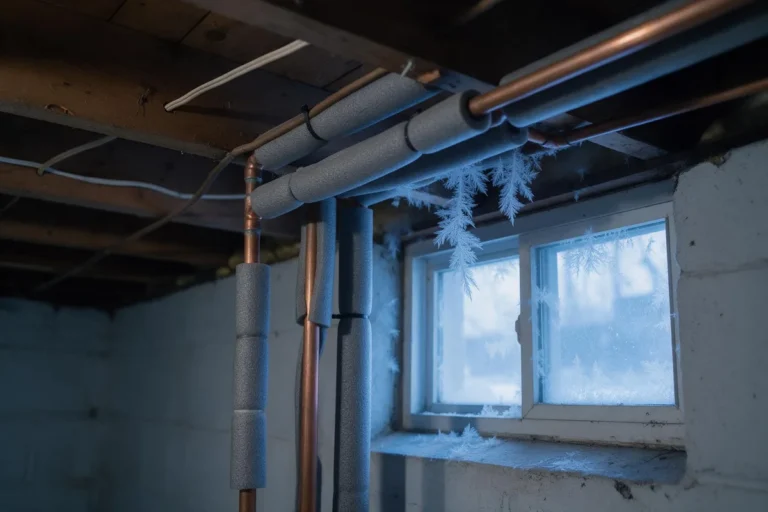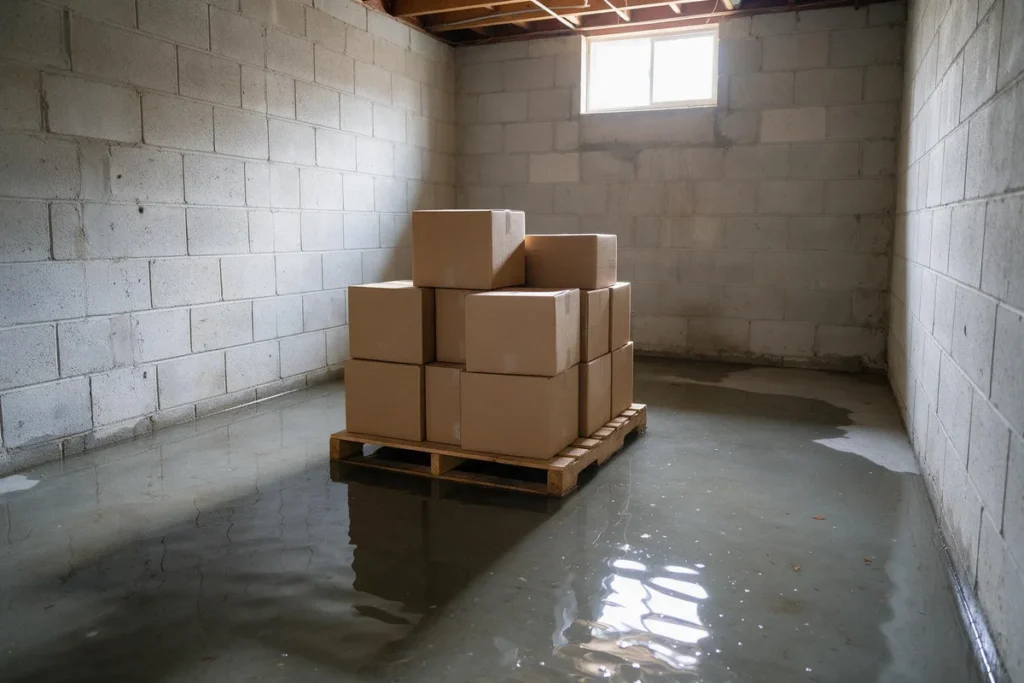
Stay out of the water until the power to the basement is off, and never touch the electrical panel if the floor around it is wet: get out and call your electric utility, or 911 if you can’t leave without touching the water. Then work out whether it is clean water or sewage, photograph everything, pump out slowly, and get the basement dry within about 48 hours to hold off mould.
- Time
- The safety steps take minutes; drying takes days, and opened walls can take weeks
- Difficulty
- Clean water is a moderate job; sewage, electrical damage or structural cracks need professionals
- Cost
- The first steps cost nothing; a pump, fans and a dehumidifier are the usual buys, and professional clean-up or electrical repairs cost far more
Safety: floodwater can be live. Don’t walk into a flooded room with powered equipment or cables in it, and don’t touch a panel that has been in water. Switch off the main breaker only if the floor around the panel is completely dry, your hands, feet and shoes are dry, and you are not touching anything metal; stand beside the panel, not in front. Otherwise touch nothing, leave without touching the water, and ask your electric utility to cut the power, or call 911 if you can’t get out.
This guide follows official advice from Health Canada, the US government’s Ready.gov, and utility and city flood guides, in the order that matters when you first find water. It covers a basement flooded by groundwater, a failed sump pump or a sewer backup. If a river or the street is flooding, follow your municipality’s instructions first, and don’t go back until the authorities say it is safe. For the products mentioned, see our flood protection guides.
To make the next flood less likely, the flooding page brings together the pumps, alarms and drainage pros we list.
What you’ll need
- Protection: rubber boots, gloves, goggles and an N95 mask, the set Health Canada lists for flood clean-up (for example the Moldex 2200N95).
- A phone or camera to record the damage before you move anything.
- A working CO alarm, especially if any fuel-burning equipment runs while you dry out.
- A way to remove water: pails, a utility pump, then a wet/dry vacuum.
- Drying kit: fans or air movers and a dehumidifier, once the power is safe to use.
- Heavy-duty bags for things that have to go, and unscented detergent for cleaning.
Step 1: Stay out of the water until the power is off
Before you take a single step down the stairs, look for anything electrical that the water could reach: outlets, power bars, appliances, extension cords and the panel. If water may be touching any of them, don’t go in. Follow the panel rule in the safety box above. Never handle wet electrical equipment while standing in water, as Ready.gov warns, and don’t plug anything in while there is standing water or your hands or feet are wet. You are done with this step when the power to the flooded area is off, by you or the utility.
Check the structure at the same time. If the foundations look damaged or washed out, leave at once and call 911; if walls or floors sag, bulge or buckle, leave and have a professional assess the house before you go back in.
Step 2: Find out whether it is clean water or sewage
Where the water came from changes everything that follows. Water that seeped through a wall or rose from an overwhelmed sump pit is usually groundwater. Water that came up through a floor drain, toilet or shower, or that smells of sewage, is a sewer backup, and Health Canada says to treat it as a serious infection risk, both through the air and by contact. Children, pregnant people and anyone with breathing problems should not handle it or anything it has touched, and older adults and people with weakened immune systems are safer staying elsewhere until cleaning is finished. If you suspect sewage, Health Canada says to contact your local public health department; sewage areas need a more thorough disinfection and extra care to protect the rest of the household and pets. If you would rather not do it yourself, a water-damage restoration company can.
Step 3: Record the damage before you clean
Once it is safe to look, photograph or film the water level, the walls, the floor, the furnace and water heater, and every damaged item, before you move or throw anything away. List the damage inside and out, send the photos to your insurer and keep the receipts for everything you buy for the clean-up. What your policy covers, especially for sewer backup, depends on the policy, so call your insurer before large work starts. If you think a sewer backup came from a fault in the city’s sewer, ask your municipality to check it.
Step 4: Pump the water out, slowly
With the power off in the flooded area, remove standing water with pails or a pump, then finish with a wet/dry vacuum, as Health Canada describes. If the ground outside is saturated, go gradually: pumping a basement out too fast can damage the foundation walls and even cause a collapse. Plug in an electric pump only where the outlet is clear of water and your hands and feet are dry, and keep extension cords out of the water. A small utility pump such as the Zoeller Model 42 drains clear water down to about 1/8 in, fits through a 7 in opening and connects to a garden hose. Zoeller rates it for clear water only, so it is not a tool for sewage.
Carbon monoxide: never run a gas-powered pump, generator, heater or dryer inside the house or garage; Health Canada warns that CO builds up quickly in poorly ventilated rooms and can kill. Keep a working CO alarm on while you dry out, and see running a generator safely in an outage before you start one. Health Canada’s flood clean-up advice.
Step 5: Dry everything within 48 hours
Health Canada says to dry the house and its contents within 48 hours to make mould less likely. Open doors and windows when the weather allows and run fans; when it doesn’t, close up and run a dehumidifier. Keep going until every surface is fully dry; opened walls can take several weeks. Only use plug-in equipment once the power is confirmed safe, plug it straight into a wall outlet, and keep it out of standing water. An air mover such as the Lasko U12104 is aimed at wet floors and walls, but Lasko’s manual says to keep it away from water and out of wet spots, so use it after the standing water is gone.
A dehumidifier with a built-in pump saves emptying a bucket every few hours. Frigidaire’s FHDP5033Y1 can push water up to 16.4 ft of hose to a floor drain, sink or basement window, but it works only between 41 and 89 °F (5 to 32 °C), and Frigidaire says it dries far less outside that range. Compare other options under dehumidifiers and drying fans.
Step 6: Remove what can’t be dried
Some things can’t be saved however well you dry them. Health Canada lists soaked flooring, insulation, drywall, carpets, particleboard furniture, mattresses, box springs, pillows, cushions, stuffed toys and furniture coverings that can’t be dried. Food, medicines and toiletries that touched the water go too. Cut soaked drywall and insulation out to at least 50 cm (20 in) above the highest water line, and leave the walls open until the framing is dry. Bag sewage-soaked items, and dispose of them and any paint, oil or solvents as your municipality directs. Clean hard surfaces with unscented detergent: Health Canada says bleach isn’t needed for mould. Watch for green or black spots, stains or a musty smell.
Step 7: Have power, gas and heating checked before you use them
Don’t switch the power back on yourself. If water reached the wiring, have a licensed electrician inspect it, and have a licensed gas fitter check any gas, propane or oil appliance that was under water; keep its gas valve closed and call your gas supplier. Have the furnace checked before you run it, and replace wet ducts, filters and insulation.
Step 8: Make the next one less likely
Once the basement is dry, fix the cause. If the sump pump failed or the power went out, a backup pump covers both: see the best battery backup sump pumps, or battery vs water-powered backups. If sewage came up a drain, a sump pump won’t help; you need backwater valves, which some cities require and subsidise (our backwater valve guide shows how one region’s rules and grants work). A loud battery water alarm by the pit or drain warns you early next time, with no Wi-Fi needed.
Flooded basement questions
Can I turn off the main breaker if there's water in the basement?
Only if the floor around the panel is completely dry, your hands, feet and shoes are dry, and you aren’t touching anything metal; stand beside the panel and use your left hand. If any of that isn’t true, don’t touch it: leave and ask your electric utility to cut the power.
Is it safe to clean up sewage myself?
It is risky. Health Canada treats sewage water as a serious infection risk and says children, pregnant people and anyone with breathing problems must not handle it. If you do any of it, wear boots, gloves, goggles and an N95; otherwise a water-damage restoration company can take the job on.
How long before mould starts after a flood?
Health Canada says to dry the house and its contents within 48 hours to make mould less likely, using fans or a dehumidifier. Materials that stay wet longer, such as drywall, insulation and carpet, usually have to come out.
Does a sump pump stop sewer backup?
No. A sump pump removes groundwater that collects in its pit. Sewage coming up through floor drains, toilets or showers comes from the sewer line, and a backwater valve on each basement drain is what stops it. A licensed plumber fits them, and some cities require them and help pay.